
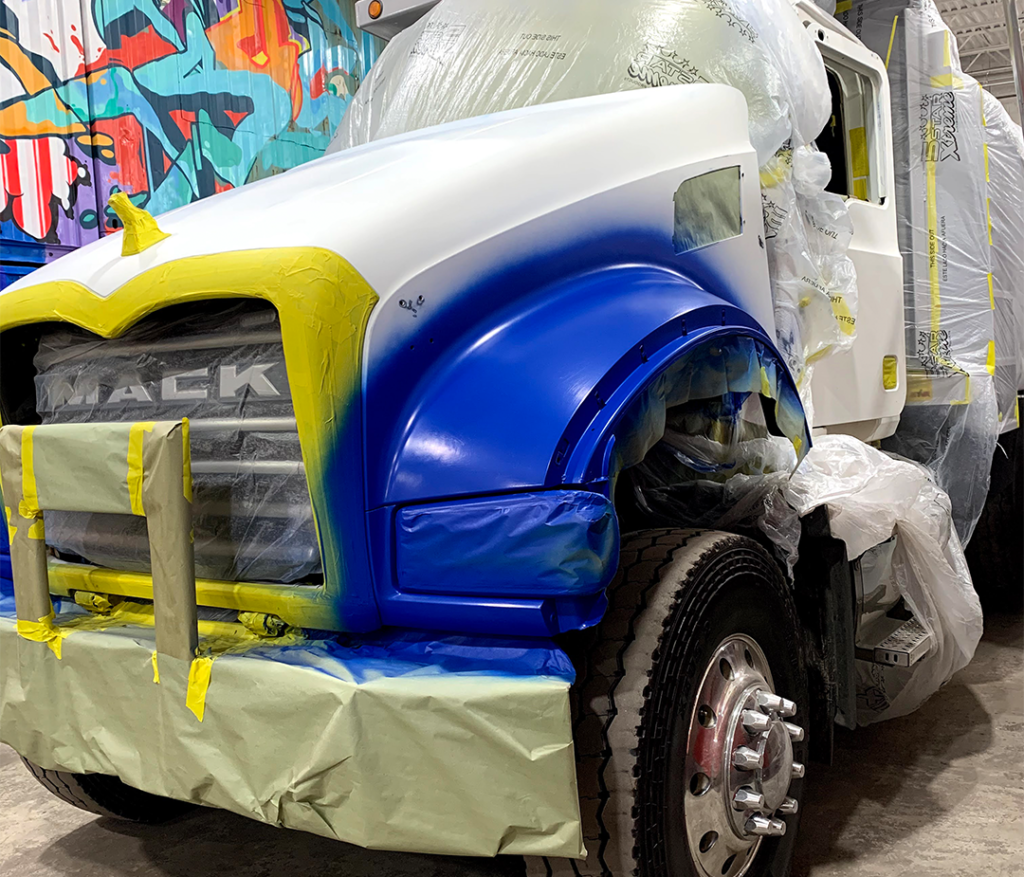
Auto body repair can take anywhere from a few hours to several weeks, depending on the type and severity of damage. Minor dents or cosmetic repairs may be completed in one to two days, while collision damage involving structural repairs, multiple panels, refinishing, or specialized truck components can take longer. Parts availability, insurance approvals, hidden damage, and the repair facility’s workload can also affect the final timeline.
Key Facts
- Minor cosmetic repairs may take a few hours to a couple of days.
- More extensive collision repairs can require several days or longer.
- Structural, frame, or specialized heavy-duty truck repairs generally require additional inspection and repair time.
- Paint work takes time because surface preparation, multiple coats, curing, and final inspection all matter.
- Hidden damage discovered after disassembly can extend the original estimate.
- Waiting for parts or insurance authorization can delay a repair even when the physical work is straightforward.
- A quality repair should prioritize proper restoration over an artificially short turnaround time.
What Is the Auto Body Repair Timeline?
The auto body repair timeline is the amount of time required to inspect, repair, refinish, reassemble, and verify a damaged vehicle after a collision or other body damage.
There is no universal number of days for every repair.
A small dent on one panel is very different from a collision involving multiple panels, structural components, paint matching, or specialized commercial truck equipment.
The repair process may include:
- Initial inspection
- Damage assessment
- Estimate preparation
- Insurance or customer authorization
- Parts ordering
- Disassembly
- Structural or body repairs
- Surface preparation
- Painting and refinishing
- Reassembly
- Quality inspection
- Final delivery
Understanding these stages makes it easier to see why an apparently simple repair can sometimes take longer than expected.
How Long Does Auto Body Repair Usually Take?
The most accurate answer is: it depends on the damage and the repair process required.
A rough timeline can look like this:
| Type of Repair | Typical Time Range* | What Can Affect the Timeline |
|---|---|---|
| Minor cosmetic damage | Same day–2 days | Paint, dent size, shop workload |
| Small dent or panel repair | 1–3 days | Access, panel condition, refinishing |
| Single-panel collision repair | 2–5 days | Parts, paint matching, hidden damage |
| Multiple-panel damage | Several days–2 weeks | Number of panels, parts, refinishing |
| Major collision repair | 1–4+ weeks | Structural damage, parts, inspections |
| Frame or structural repair | Several days–weeks | Severity, measurements, specialized work |
| Heavy-duty truck body repair | Varies significantly | Vehicle size, components, fabrication, parts |
*These are general planning ranges, not guaranteed completion times. Every vehicle and repair is different.
For commercial trucks, the timeline can be particularly difficult to predict because the damaged area may involve specialized bodies, frames, tanks, trailers, fiberglass components, or equipment.
Fast Action Body Repair specializes in truck collision repair, painting, and truck bodywork, so the appropriate timeline depends on the specific truck and scope of work rather than a standard passenger-vehicle estimate.
What Determines How Long Auto Body Repair Takes?
Several factors influence how quickly a vehicle can be repaired.
1. Severity of the Damage
The extent of the damage is usually the biggest factor.
A vehicle with a small dent and intact surrounding components may require limited work.
A collision involving several panels can require:
- Panel removal
- Straightening
- Replacement components
- Structural inspection
- Welding or fabrication
- Paint preparation
- Refinishing
- Reassembly
The more operations involved, the longer the repair is likely to take.
2. Hidden Damage
What you see from the outside isn’t always the complete picture.
A collision can damage components behind a bumper, panel, body section, or other exterior part.
That’s why technicians may need to disassemble part of the vehicle before confirming the full repair scope.
If hidden damage is discovered after work begins, the original estimate may need to be revised.
This is one of the most common reasons a repair takes longer than the initial expectation.
3. Parts Availability
Parts availability can have a major effect on repair time.
If the necessary replacement part is already available, work may proceed quickly.
If a component must be ordered, shipped, backordered, custom-built, or sourced from another supplier, the vehicle may remain in the repair process while the shop waits.
For commercial trucks, specialized components can make parts availability even more important.
4. Paint and Refinishing Requirements
Paint repair isn’t simply a matter of applying color to a damaged area.
Professional refinishing can involve:
- Cleaning
- Sanding
- Rust removal when necessary
- Surface preparation
- Priming
- Color application
- Clear coat or appropriate protective finish
- Drying or curing
- Final inspection
Skipping preparation to save time can create problems with adhesion, appearance, and durability.
Fast Action Body Repair explains that its truck painting process includes cleaning, sanding, primer, paint application, clear coat, and final finishing steps.
5. Insurance Authorization
Insurance-related repairs can involve another timeline outside the physical repair itself.
Depending on the claim, the process may include:
- Initial inspection
- Estimate submission
- Adjuster review
- Supplement requests
- Approval
- Parts authorization
- Additional documentation
A repair facility may be ready to perform the work while waiting for an authorization or decision.
6. Shop Workload
Even when a repair itself is relatively straightforward, a shop’s current workload can influence scheduling.
This is particularly important for specialized facilities.
A heavy-duty truck requires different space, equipment, tools, and repair procedures than a typical passenger vehicle.
How Long Does Minor Auto Body Repair Take?
Minor body damage is generally faster to repair than major collision damage.
Examples include:
- Small dents
- Scratches
- Paint chips
- Minor bumper damage
- Localized cosmetic damage
Some repairs may be completed the same day, while others may take one or more days depending on whether painting or parts replacement is necessary.
Why Minor Damage Can Still Take Several Days
A small damaged area may require more work than expected.
For example, a scratch may appear simple but require sanding, blending, primer, paint, clear coat, and curing.
Likewise, a dent may require panel access, bodywork, surface preparation, and refinishing.
The physical damage may be small, but achieving a professional finish still takes time.
How Long Does Collision Repair Take?
Collision repair usually takes longer because multiple components may be affected.
A moderate collision might involve:
- Bumper damage
- Fenders
- Doors
- Hood
- Lighting components
- Body panels
- Mounting points
- Structural components
- Paint and refinishing
A more serious collision can require substantial disassembly and structural work.
The important question isn’t simply, “How many days will it take?”
A better question is:
What work needs to be completed before the vehicle can safely and properly return to service?
That approach helps avoid rushing repairs that require careful measurements, fitting, welding, refinishing, or inspection.
How Long Does Truck Body Repair Take?
Truck body repair can have a different timeline from conventional auto body repair.
Commercial and heavy-duty vehicles may have specialized configurations, including:
- Dump bodies
- Tankers
- Trailers
- Boom trucks
- Concrete mixer bodies
- Fire apparatus
- Fleet equipment
- Specialized truck frames
Fast Action Body Repair specifically lists truck and trailer repair, truck frames, tanker trucks, dump bodies, boom trucks, transit cement mixers, fire apparatus and emergency vehicles, fiberglass repair, welding and fabrication, and related services.
Because these vehicles vary significantly, providing a guaranteed timeline without inspecting the damage would be misleading.
For a fleet operator, however, turnaround time has an additional business impact: downtime can affect productivity and revenue.
Fast Action Body Repair emphasizes speed and precision as part of its approach to minimizing vehicle downtime.
Why Paint Work Can Add Time to a Repair
Paint and refinishing are important parts of many body repairs.
A professional finish requires more than matching a paint color.
The technician must create a clean, properly prepared surface and apply the appropriate materials in the correct sequence.
Base Coat and Clear Coat
For areas such as truck cabs where appearance matters, a base coat and clear coat system can provide a polished finish.
Fast Action Body Repair describes this approach as suitable for cabs where a professional, factory-style appearance is important.
Single-Stage Enamel
Heavy-duty components such as frames, boxes, tanks, or dump bodies may have different functional requirements.
Fast Action Body Repair recommends single-stage enamel for certain utilitarian truck components because of its durability and cost-effectiveness.
The correct coating depends on the component, intended use, appearance requirements, and operating environment.
What Happens During the Auto Body Repair Process?
Knowing the stages can make the timeline easier to understand.
Stage 1: Initial Inspection
The repair facility examines visible damage and identifies areas that may require further investigation.
Stage 2: Estimate and Repair Plan
The shop determines the likely operations, parts, materials, labor, and refinishing requirements.
Stage 3: Authorization
The customer or relevant insurance party approves the repair plan.
Stage 4: Parts and Materials
Required components and materials are obtained.
Stage 5: Disassembly
Technicians remove damaged or obstructing components to access the affected areas.
Stage 6: Structural and Body Repair
Depending on the vehicle, technicians may straighten, repair, replace, weld, fabricate, or otherwise restore damaged components.
Stage 7: Surface Preparation
The repaired area is cleaned, sanded, prepared, and primed as needed.
Stage 8: Refinishing
Paint and protective coatings are applied according to the requirements of the repair.
Stage 9: Reassembly
Components are reinstalled and the vehicle is put back together.
Stage 10: Final Inspection
The completed repair is reviewed for fit, finish, appearance, and overall quality before delivery.
This final stage matters. A vehicle shouldn’t be considered finished simply because the paint looks good from a distance.
What Can Cause Auto Body Repairs to Take Longer?
Unexpected delays can happen even with an experienced repair facility.
Common causes include:
- Hidden collision damage
- Backordered parts
- Shipping delays
- Additional damage discovered during disassembly
- Insurance supplements
- Complex paint matching
- Extensive corrosion or rust
- Structural damage
- Specialized fabrication
- Unexpected mechanical or electrical issues
- Additional customer-requested work
- Larger-than-expected repair scope
The key is communication.
A reputable repair facility should explain significant changes to the repair scope rather than allowing the customer to wonder why the vehicle is taking longer.
Does Faster Auto Body Repair Mean Better Repair?
Not necessarily.
Speed is valuable, especially when a commercial vehicle is out of service. But repair quality should not be sacrificed simply to meet an arbitrary deadline.
A rushed repair can create problems such as:
- Poor paint adhesion
- Uneven finish
- Incorrect panel fit
- Incomplete corrosion treatment
- Missed damage
- Premature coating failure
- Rework
The goal should be efficient, properly performed repair.
Fast Action Body Repair describes its philosophy as combining speed with precision and emphasizes minimizing downtime while maintaining workmanship.
Passenger Vehicle vs. Commercial Truck Repair Timeline
| Factor | Passenger Vehicle | Commercial / Heavy-Duty Truck |
|---|---|---|
| Vehicle size | Smaller | Larger and more complex |
| Parts | Often widely available | May require specialized sourcing |
| Body components | Standard panels | May include specialized bodies |
| Structural work | Depends on collision | Can involve frames and heavy-duty structures |
| Painting | Standard automotive refinishing | May involve large surfaces and specialized coatings |
| Fabrication | Less common | Can be an important part of repairs |
| Downtime impact | Personal transportation | Can directly affect business operations |
| Timeline predictability | Often easier | Can vary substantially by vehicle and damage |
This is why commercial truck repair should be evaluated individually rather than using a generic passenger-car estimate.
How to Get Your Vehicle Repaired Faster Without Sacrificing Quality
If minimizing downtime matters, there are several practical steps you can take.
1. Provide Complete Information
Tell the repair facility how the damage occurred and identify any symptoms you’ve noticed.
2. Ask What Is Included in the Estimate
Understanding the repair scope helps prevent surprises later.
3. Ask About Parts Availability
If a major component is backordered, you’ll want to know before planning around an estimated completion date.
4. Respond Quickly to Approval Requests
Delays in communication can delay the entire repair process.
5. Don’t Ignore Previous Damage
Unrelated damage or existing corrosion may affect how the new repair is performed.
6. Tell the Shop About Your Operational Needs
For a commercial truck, explain whether the vehicle is essential to a particular route, job, or fleet operation.
That information can help the repair facility understand the importance of minimizing downtime.
Common Mistakes Customers Make
Mistake 1: Expecting Every Repair to Take the Same Amount of Time
A bumper repair and a structural truck repair are completely different jobs.
Avoid it: Ask for a timeline based on your vehicle and specific damage.
Mistake 2: Choosing a Shop Solely Because It Promises the Fastest Date
A fast promise isn’t useful if the repair later requires rework.
Avoid it: Consider workmanship, experience, communication, equipment, and turnaround together.
Mistake 3: Assuming the Initial Estimate Is Always Final
Disassembly can reveal damage that wasn’t visible during the initial inspection.
Avoid it: Ask how supplements and unexpected damage will be handled.
Mistake 4: Ignoring Parts Availability
A repair may be ready to begin but unable to proceed without a required component.
Avoid it: Ask which parts are available and which must be ordered.
Mistake 5: Treating Commercial Trucks Like Passenger Cars
Heavy-duty trucks often require specialized equipment, fabrication, or bodywork.
Avoid it: Work with a repair facility experienced with the type of vehicle involved.
Expert Tips for Reducing Repair Downtime
Get an Inspection Early
The sooner the full scope of damage is understood, the easier it is to plan the repair.
Ask for a Written Scope
A written repair plan can clarify what work is expected and what could change.
Choose Experience That Matches the Vehicle
A facility experienced with passenger cars isn’t automatically the best choice for a tanker, dump truck, trailer, fire apparatus, or specialized commercial vehicle.
Ask About the Repair Process
A good repair facility should be able to explain the major stages of the work in understandable terms.
Prioritize “Done Right”
For a vehicle that supports your business, a quality repair can be more valuable than shaving one day off the schedule and risking additional downtime later.
Frequently Asked Questions
1. How long does auto body repair usually take?
Minor repairs can take the same day to a few days, while major collision repairs can take several weeks. The actual timeline depends on damage severity, parts, structural work, paint requirements, insurance approvals, and shop workload.
2. How long does a small dent repair take?
A small dent may be repaired in a few hours or within one to two days, depending on the dent, panel, repair method, paint requirements, and facility schedule.
3. How long does collision repair take?
Collision repair commonly takes several days to multiple weeks. More extensive damage involving structural components, multiple panels, or specialized parts generally requires more time.
4. Why is my auto body repair taking longer than expected?
Common reasons include hidden damage, parts delays, insurance approvals, additional repair requirements, complex refinishing, corrosion, and unexpected problems discovered after disassembly.
5. Does painting a truck take several days?
Yes. Fast Action Body Repair states that truck painting typically takes about three to seven days, depending on surface preparation, drying time, and custom detailing.
6. Can an auto body shop guarantee a completion date?
A shop may provide an estimated completion date, but unexpected damage, parts availability, insurance approvals, and other factors can change the timeline.
7. Is faster body repair always better?
No. Efficient repair is valuable, but quality and proper restoration should not be sacrificed to meet an arbitrary deadline.
8. How long does commercial truck body repair take?
There is no standard timeline. The repair may involve specialized truck bodies, frames, fabrication, fiberglass, painting, or other components. An inspection is necessary to provide a realistic estimate.
9. Can hidden damage increase repair time?
Yes. Damage that isn’t visible from the outside may be discovered after disassembly. Additional parts, labor, structural repairs, or refinishing may then be required.
10. How can I reduce the time my truck spends in the repair shop?
Provide complete information, respond quickly to authorization requests, ask about parts availability, choose a facility experienced with your vehicle type, and communicate how important the vehicle is to your operations.
Why Choose Fast Action Body Repair?
Fast Action Body Repair is a specialized truck body repair and collision facility located in Far Rockaway, New York. The company describes its focus as truck collision repair, painting, and truck bodywork, with an emphasis on speed, precision, and minimizing vehicle downtime.
The company has a long-standing history in the local market. According to its About page, Fast Action began in 2008 and grew from a small warehouse operation into a business serving some of New York’s largest truck fleets.
Its services cover a broad range of commercial and specialized vehicles, including truck and trailer repair, truck frames, dump trucks, tankers, boom trucks, transit cement mixers, fire apparatus, fiberglass repair, welding and fabrication, truck painting, and fleet-related services.
That range matters when the repair involves something more complicated than a standard body panel.
Fast Action also emphasizes transparency, stating that customers should not encounter surprise bills and that the company focuses on returning vehicles to service efficiently.
For commercial operators, that combination of specialized capability, communication, and turnaround can be particularly important because vehicle downtime can affect day-to-day operations.
Contact us
If your truck or commercial vehicle has collision or body damage, don’t rely on a generic repair timeline.
Have the vehicle inspected so the actual damage, repair requirements, parts, refinishing, and expected turnaround can be evaluated together.
Fast Action Body Repair serves customers from its Far Rockaway location and provides truck collision repair, bodywork, painting, frame work, fiberglass repair, welding and fabrication, and specialized truck services.