



start mixer drum cleaning business Long Island
How to Start a Mobile Concrete Mixer Drum Cleaning Business on Long Island
Anyone looking to start a mixer drum cleaning business on Long Island is looking at a market with an unusually good setup: a dense concentration of ready-mix concrete producers across Nassau and Suffolk County, most of them running fleets that need drum maintenance on an ongoing basis, and very few dedicated service providers filling that specific niche.
It’s a real, recurring-revenue opportunity for someone willing to invest in the right equipment. This isn’t a business built on one-time jobs. Every mixer truck on the road accumulates hardened concrete buildup over time, and every plant that runs a fleet eventually has to deal with it — whether in-house or through an outside contractor. That recurring need is exactly what makes drum cleaning a viable standalone service line rather than a side task.
Why Long Island Is a Strong Market for This Service
Long Island’s ready-mix industry is large enough to generate steady demand but concentrated enough that a single mobile operation can realistically cover multiple plants without excessive travel time between jobs.
Nassau and Suffolk County host a mix of large multi-plant operators and smaller independent yards — and drum maintenance needs don’t scale down proportionally with fleet size. Even a smaller operation with five or six trucks still needs its drums cleaned regularly.
Unlike saturated services (paving, general concrete supply, equipment rental), mobile drum cleaning specifically is a narrow, underserved niche. Most fleets are still handling it in-house with manual labor — which, as covered in our comparison of robotic vs. manual mixer drum cleaning, is slower, riskier, and harder on the equipment than the robotic alternative.
What the Business Actually Involves
At its core, a mobile drum cleaning service is straightforward:
- Travel to a client’s plant or yard (or have trucks brought to a central location)
- Use a robotic hydrodemolition system to clean hardened concrete from inside each drum
- Charge per drum, per cycle, or under a recurring maintenance contract
The value proposition to the client is simple: they get their drums cleaned without pulling a crew off other work, without confined-space liability, and without wearing down their own drums through repeated manual chipping.
The Equipment You Actually Need
The entire business model depends on one core piece of equipment: a robotic mixer drum cleaning system capable of high-pressure water blasting. This is not something to build from scratch — established systems already exist and are purpose-built for exactly this job.
A robotic hydrodemolition unit, like a ReadyJet-class system, typically offers:
- 20,000 PSI operating pressure — enough to break down hardened concrete without manual impact tools
- Single-operator control — no crew required to run the cleaning cycle itself
- ~500 kg removed in about 75 minutes — a realistic cycle time for a per-drum service model
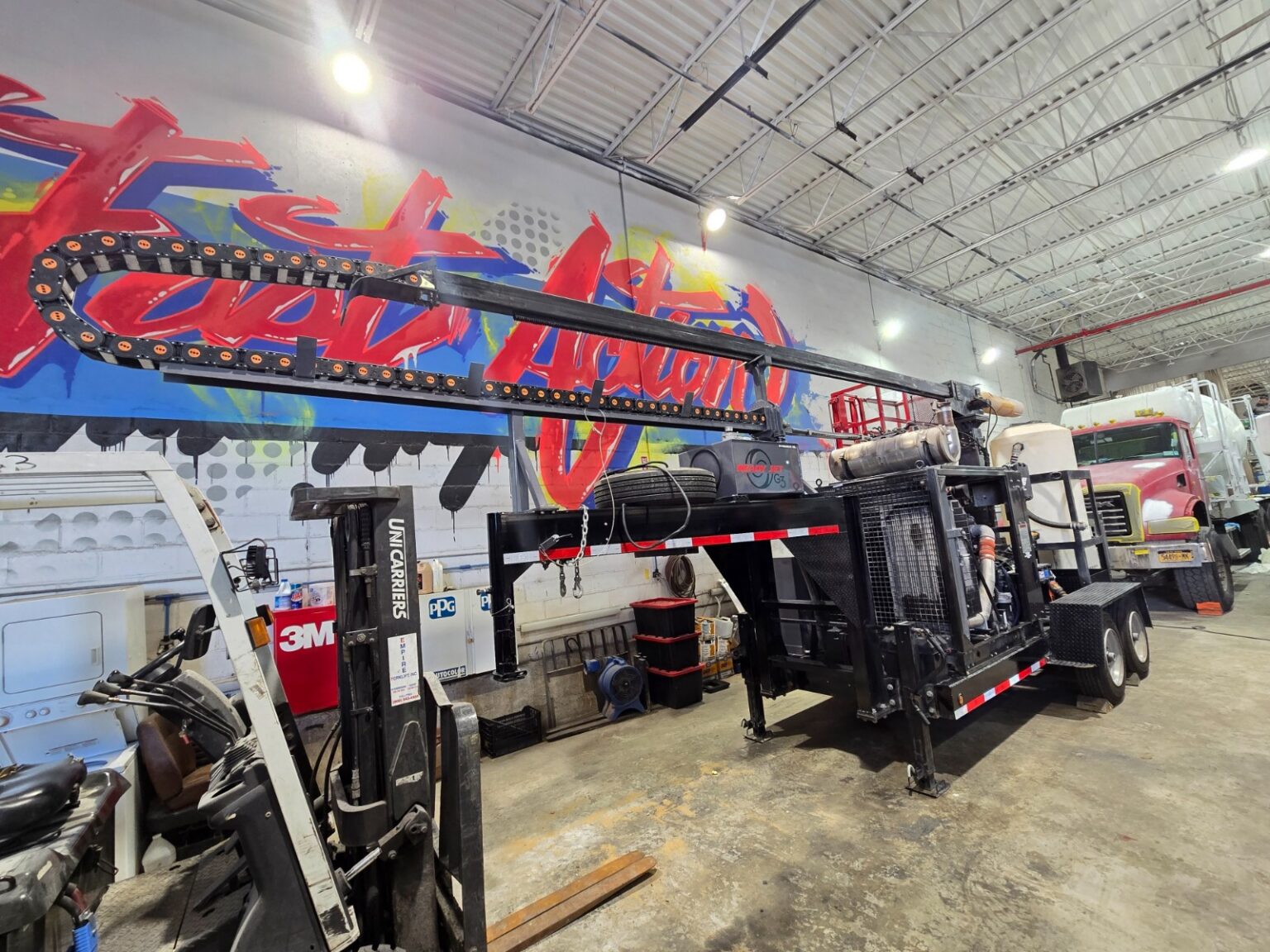
- Mobile trailer configuration — the unit travels to the client instead of the client bringing trucks to you
This last point matters for a mobile business specifically: a gooseneck trailer setup means the equipment goes wherever the work is, which is the entire premise of a mobile service.
Getting Started Without the Cost of a New Build
New robotic drum cleaning systems represent a significant capital investment — often well over $150,000 — which can be a real barrier for someone starting a new service business rather than expanding an existing fleet operation.
A well-maintained, low-hour used unit changes that math considerably, letting a new operator enter the market at a fraction of the new-build cost while still getting a fully operational, reliable system.
That’s exactly the opportunity with the 2021 ReadyJet G3 currently for sale — only 412 operating hours, purchased new for more than $190,000, now available at $129,000 OBO. For someone building a mobile drum cleaning business on Long Island, that’s a working, ready-to-deploy asset rather than a multi-month wait on a new order.
Building Client Relationships in the Ready-Mix Industry
Ready-mix producers tend to value reliability and consistency over the lowest price — a service provider who shows up on schedule, does the job right the first time, and doesn’t damage the drum will keep client relationships for years.
Starting with a few plants in Nassau or Suffolk County and expanding through referrals is a realistic path in an industry where operators talk to each other regularly.
A Real Opportunity for the Right Operator
Starting a mixer drum cleaning business on Long Island isn’t a guaranteed win-just-show-up proposition — it requires the right equipment, some initial relationship-building with local plants, and a clear understanding of the service.
But the underlying demand is real, the competition in this specific niche is thin, and the entry equipment cost has a genuine shortcut through the used equipment market.
If you’re seriously evaluating this, start with the equipment. Review the full specifications on the ReadyJet G3 for sale page, or call 718-558-4111 to ask about scheduling an inspection in Far Rockaway, NY.
Frequently Asked Questions
How much does it cost to start a mobile mixer drum cleaning business?
The largest single cost is the robotic cleaning equipment itself. A well-maintained used unit can bring that entry cost down significantly compared with a new build.
What equipment do I need to start a drum cleaning service?
At minimum, a robotic hydrodemolition system capable of high-pressure water blasting, mounted on a mobile trailer so it can travel to client sites.
How many clients can one robotic drum cleaning unit realistically serve?
That depends on drum-cleaning frequency and travel distance between plants, but Long Island’s concentration of ready-mix producers supports serving multiple clients without excessive travel time.
Do I need special licensing to operate a mobile drum cleaning business?
Requirements vary by location and business structure — check with local and state authorities before starting operations.
How do I find ready-mix clients on Long Island?
Direct outreach to plants in Nassau and Suffolk County, combined with referrals once you’ve built a reliable track record, is a realistic starting approach in an industry where operators talk to each other regularly.
Can I buy used equipment to start this business?
Yes. A low-hour used system, like the ReadyJet G3 currently for sale, can be a practical way to enter the market without the cost or wait of a new-build order.
How much can a mobile drum cleaning business charge per job?
Pricing varies by market and service model (per-drum, per-cycle, or contract), and is best benchmarked against what fleets currently spend on in-house manual cleaning labor and downtime
Contact Us
Follow Us


